
Wednesday, February 4, 2015

Toddler nutrition: 5 tips for healthier kids

Here are five suggestions:
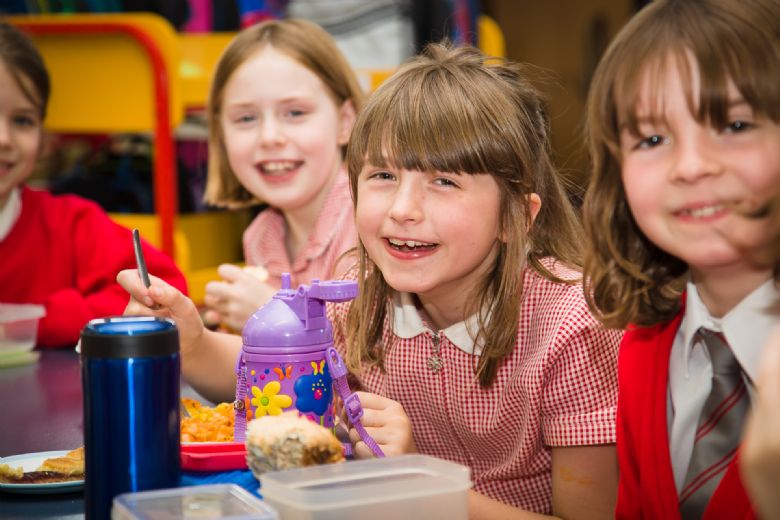
- Encourage toddlers to eat fruits and vegetables as snacks by cutting them up into appealing morsels.
- Don’t assume all prepackaged toddler meals or snacks are low in sodium. Check the nutrition facts label and strive for 210 milligrams of sodium or less per meal (and no more than 250 milligrams per meal) for a toddler, says nutritionist Lianne Phillipson-Webb of Sprout Right in Toronto.
- Children under age four consuming 1,200 to 1,400 calories per day on average should limit added sugars to about four teaspoons a day, the American Heart Association recommends.
- Look for whole rather than refined grains.
- Instead of relying on boxed crackers or bread sticks for snacks, add fruit or melted cheese to plain rice cakes, popcorn or a batch of homemade pancakes.
src: cbc.ca
Enforcing Kids’ Screen Time Limits “Virtually Impossible”

Most parents struggle to limit their children’s screen time to less than two hours a day, study says. A world-first longitudinal study by The University of Western Australia (UWA) researchers examining the links between mental health and screen use by children and teenagers has found that guidelines to limit screen-based media-use to less than two hours a day are out of date and ‘virtually impossible' to enforce.
Wednesday, January 28, 2015
Maha shivaratri vrat katha Hindi, Maha shivaratari katha, fast story, katha download, celebrate Mahashivaratri, pooja, process, ritual, Shivratri women fast, ladies, female, Maha Shivratri 2015 date
Maha
shivaratri vrat katha Hindi, Maha shivaratari katha, fast story, katha
download, celebrate Mahashivaratri, pooja, process, ritual, Shivratri
women fast, ladies, female, Maha Shivratri 2015 date, Maha Shivratri

Maha Shivratri is to be celebrated on - 17th Feb 2015.
Story to be read on Maha Shivratri 2015
Once upon a time King Chitrabhanu of the Ikshvaku dynasty, who ruled over the whole of Jambudvipa (India), was observing a fast with his wife, it being the day of Maha Shivaratri. The sage Ashtavakra came on a visit to the court of the king.
The sage asked the king the purpose of his observing the fast. King Chitrabhanu explained that he had a gift of remembering the incidents of his past birth, and in his previous life he had been a hunter in Varanasi and his name was Suswara. His only livelihood was to kill and sell birds and animals. The day before the new moon, while roaming through forests in search of animals, he saw a deer, but before his arrow flew he noticed the deer's family and their sadness at its impending death. So he let it live. He had still not caught anything when night fell, so he climbed a tree for shelter. It happened to be a Bael tree. His canteen leaked water, so he was both hungry and thirsty. These two torments kept him awake throughout the night, thinking of his poor wife and children who were starving and anxiously awaiting his return. To pass the time, he engaged himself in plucking the Bael leaves and dropping them down onto the ground.
The next day he returned home and bought some food for himself and his family. The moment he was about to break his fast a stranger came to him, begging for food. He served the food first to stranger and only ate afterward.
At the time of his death, he saw two messengers of Lord Shiva, sent to conduct his soul to the abode of Shiva. He learnt then for the first time of the great merit he had earned by unconscious worship of Shiva during the night of Maha Shivaratri. The messengers told him that there had been a Lingam (a symbol for the worship of Shiva) at the bottom of the tree. The leaves he dropped from the Bael tree had fallen into the shape of a Lingam, in imitation of Shiva's ritual worship. The water from his leaky canteen had washed the Lingam (also a ritual action), and he had fasted all day and all night. Thus, he unconsciously had worshiped Lord Shiva. At the conclusion of the tale the King said that he had lived in the abode of the Shiva and enjoyed divine bliss for a long time before being reborn as Chitrabhanu. This story is narrated in the Garuda Purana.[6]
'Shivaratri' means 'night of Shiva'. The important components of this religious festival are rigid fasting for twenty four hours and sleepless vigil during the night. Every true devotee of Lord Shiva spends the night of Shivaratri in deep meditation, keeping vigil and observing the fast.
The worship of Lord Shiva consists in offering flowers, Bilva leaves and other gifts on the Lingam, which is a symbol of Lord Shiva, and bathing it with milk, curd, ghee, honey, sugar, coconut water, butter, and rose-water.
When creation had been completed, Shiva and Parvati had been living on the top of Kailas. Parvati asked: “O venerable God, which of the many rituals observed in Thy honour doth please Thee most?” Lord Shiva replied: “The thirteenth night of the new moon, Krishna Paksha, in the month of Magha(February–March) is known as Maha Shivaratri, My most favourable Tithi. My devotees give Me greater happiness by mere fasting than by ceremonial baths, and offerings of flowers, sweets, and incense.
"Just hear, My Beloved, of an episode which will give you an idea of the glory and power of this ritual," said Lord Shiva to Parvati.
“Once upon a time, there lived in the town of Varanasi a hunter. He was returning from the forest one evening with the game birds he had killed. He felt tired and sat at the foot of a tree to take some rest. He was soon overpowered by sleep. When he awoke, it was the thick darkness of night. It was the night of Maha Shivaratri but he didn't know it. He climbed up the tree, tied his bundle of dead birds to a branch and sat up waiting for the dawn. The tree happened to be My favorite, the Bilva tree.
“There was a Lingam under that tree. He had plucked a few leaves and then dropped them down, accidentally forming the shape of a Lingam. The night-dew trickled down from his body. I was highly pleased with involuntary little gifts of the hunter. The day dawned and the hunter returned home.
“In time, the hunter fell ill and gave up his last breath. The messengers of Yama(Lord of Death) arrived at his bedside to carry his soul to Yamlok(abode of Yama). My messengers also went to the spot to take him to My abode. There was a vicious fight between Yama’s messengers and My messengers. The former were easily defeated. They reported the matter to Yama, Lord of Death. He arrived in person at the portals of My abode. Nandi gave him an idea of the sanctity of Maha Shivaratri and the love which I had for that hunter. Yama surrendered the hunter to Me and returned to his abode. Thereafter, Yama has pledged not to touch my devotees without my consent.
“The hunter was able to enter My abode and ward off death by simple fasting and the offering of a few Bilva leaves, even accidentally, because it was the night of Maha Shivaratri. Such is the solemnity and sacredness associated with that night.”
Parvati was deeply impressed by the speech of Lord Shiva on the sanctity and glory of Maha Shivaratri. She repeated it to Her friends, who in their turn passed it on to the ruling princes on earth. Thus, the sanctity of Maha Shivaratri was broadcast all over the world.
How is Maha shivaratri celebrated, Maha Shivaratri 2015 date, Maha Shivaratri, Maha Shivaratri festival, celebrate Maha Shivaratri, pooja, process, ritual, Maha Shivaratri katha, teej women fast ladies female
How is Maha shivaratri celebrated, Maha Shivaratri 2015 date, Maha Shivaratri, Maha Shivaratri festival, celebrate Maha Shivaratri, pooja, process, ritual, Maha Shivaratri katha, teej women fast ladies female
Maha Shivaratri is on 17th Feb 2015.
There are 12 Jyotirlinga's all over India which are considered divine and places of worship of Lord Shiva. They are
Jyotirlingas
Maha Shivratri (the 'Great Night of Shiva') is a Hindu festival celebrated every year in reverence of Lord Shiva. It is the day Shiva was married to Parvati. The Maha Shivratri festival, also popularly known as 'Shivratri' or 'Great Night of Lord Shiva', is observed on the 13th night/14th day in the Krishna Paksha every year on the month of Falgun according to the Hindu calendar. Alternate common spellings include Sivaratri, Shivaratri, Sivarathri, and Shivarathri. It marks the convergence of Shiva and Shakti. Maha Shivratri is celebrated on the Krishna Paksha Chaturdashi of Hindu calendar month Maagha as per Amavasya-ant month calculation. As per Poornima-ant month calculation, the day is Krishna Paksha Chaturdashi of Hindu calendar month Phalguna which falls in February or March as per the Gregorian calendar. Of the twelve Shivaratris in the year, the Maha Shivarathri is the most holy.
The festival is principally celebrated by offerings of Bael or golden apple or Bilva/Vilvam leaves to Lord Shiva, all-day fasting and an all-night-(jagarana). All through the day, devotees chant "Om Namah Shivaya", a sacred Panchakshara mantra dedicated to Lord Shiva. In accordance with scriptural and discipleship traditions, penances are performed in order to gain boons in the practice of Yoga and meditation, in order to reach life's highest good steadily and swiftly. On this day, the planetary positions in the Northern hemisphere act as potent catalysts to help a person raise his or her spiritual energy more easily. The benefits of powerful ancient Sanskrit Mantras such as Maha Mrityunjaya Mantra increase greatly on this night
Rituals Performed on Maha Shivaratri
Very early morning, Shiva temples are flocked by devotees, young and old, who come to perform the traditional Shivalinga worship (puja) and hence hope for favours from the God. Devotees bathe at sunrise, preferably in the Ganga, or any other holy water source (like the Shiv Sagartank at Khajurao). This is a rite of purification, which is an important part of all Hindu festivals. Wearing clean clothing after the holy bath, worshippers carry pots of water to the temple to bathe the Shivalinga. Women and men both offer prayers to the sun, Vishnu and Shiva. The temple reverberates with the sound of bells and shouts of “Shankerji ki Jai” meaning 'Hail Shiva'. Devotees circulate the lingam three or seven times, and then pour water over it. Some also pour milk over it.
According to the Shiva Purana, the Mahashivaratri worship must incorporate six items:
Bathing the Shiva Linga with water, milk and honey. Wood, apple or bel leaves are added to, which represents purification of the soul;
Vermilion paste is applied to the Shiva Linga after bathing it. This represents virtue;
Offering of fruits, which is conducive to longevity and gratification of desires;
Burning incense, yielding wealth;
The lighting of the lamp which is conducive to the attainment of knowledge;
And betel leaves marking satisfaction with worldly pleasures.
Tripundra refers to the three horizontal stripes of holy ash applied to the forehead by worshipers of Lord Shiva. These stripes symbolise spiritual knowledge, purity and penance (spiritual practice of Yoga). They also represent the three eyes of Lord Shiva.
Wearing a mala (rosary) made from the rudraksha seeds of the rudraksha tree (said to have sprung from the tears of Lord Shiva) when worshiping Lord Shiva is ideal. A rudraksha seed is mahogany-like color, or could sometimes be black. They might also have traces of sacred sandalwood powder, turmeric, kumkum, or holy ash if the rosary is used in worship ceremonies or annointations.
Maha Shivaratri is on 17th Feb 2015.
Jyotirlingas
- • Somnath Temple
- • MallikarjunTemple
- • Mahakaleshwara Temple
- • Omkareshwar Temple
- • Vaidyanath Temple
- • Bhimashankar Temple
- • Rameshwaram Temple
- • Nageshwar Temple
- • Vishwanath Temple
- • Trimbakeshwar Temple
- • Kedarnath Temple
- • Grishneshwar Temple
The festival is principally celebrated by offerings of Bael or golden apple or Bilva/Vilvam leaves to Lord Shiva, all-day fasting and an all-night-(jagarana). All through the day, devotees chant "Om Namah Shivaya", a sacred Panchakshara mantra dedicated to Lord Shiva. In accordance with scriptural and discipleship traditions, penances are performed in order to gain boons in the practice of Yoga and meditation, in order to reach life's highest good steadily and swiftly. On this day, the planetary positions in the Northern hemisphere act as potent catalysts to help a person raise his or her spiritual energy more easily. The benefits of powerful ancient Sanskrit Mantras such as Maha Mrityunjaya Mantra increase greatly on this night
Rituals Performed on Maha Shivaratri
Very early morning, Shiva temples are flocked by devotees, young and old, who come to perform the traditional Shivalinga worship (puja) and hence hope for favours from the God. Devotees bathe at sunrise, preferably in the Ganga, or any other holy water source (like the Shiv Sagartank at Khajurao). This is a rite of purification, which is an important part of all Hindu festivals. Wearing clean clothing after the holy bath, worshippers carry pots of water to the temple to bathe the Shivalinga. Women and men both offer prayers to the sun, Vishnu and Shiva. The temple reverberates with the sound of bells and shouts of “Shankerji ki Jai” meaning 'Hail Shiva'. Devotees circulate the lingam three or seven times, and then pour water over it. Some also pour milk over it.
According to the Shiva Purana, the Mahashivaratri worship must incorporate six items:
Bathing the Shiva Linga with water, milk and honey. Wood, apple or bel leaves are added to, which represents purification of the soul;
Vermilion paste is applied to the Shiva Linga after bathing it. This represents virtue;
Offering of fruits, which is conducive to longevity and gratification of desires;
Burning incense, yielding wealth;
The lighting of the lamp which is conducive to the attainment of knowledge;
And betel leaves marking satisfaction with worldly pleasures.
Tripundra refers to the three horizontal stripes of holy ash applied to the forehead by worshipers of Lord Shiva. These stripes symbolise spiritual knowledge, purity and penance (spiritual practice of Yoga). They also represent the three eyes of Lord Shiva.
Wearing a mala (rosary) made from the rudraksha seeds of the rudraksha tree (said to have sprung from the tears of Lord Shiva) when worshiping Lord Shiva is ideal. A rudraksha seed is mahogany-like color, or could sometimes be black. They might also have traces of sacred sandalwood powder, turmeric, kumkum, or holy ash if the rosary is used in worship ceremonies or annointations.
Tuesday, January 27, 2015
Indian home remedy for dry skin kids, Remedies for Winters skin kids dry white scaly, Winters toddler infant skin gets dry, home remedies lotion for dry skin kids india, dry skin kids remedies
Indian home remedy for dry skin kids, Remedies for Winters skin kids dry white scaly, Winters kids skin gets dry, home remedies lotion for dry skin kids india, dry skin kids remedies

During Winters toddlers, infants and kids skin gets dry and scaly with white layers on the skin.
- Some lotions are being recommended by Pediatricians like Atogla Lotion/ cream - this is quite effective and can be easily found in chemist stores.
- Home remedy for this is - apply glycerine mixed with rose water and apply 2-3 times to the kid in the effected area.
- During Bath: dont apply harsh soaps, Use mild soaps recommended for kids.
- Oil Massage followed by hot water bath: Oil Massage to the baby's body can prove beneficial.
Maddy Hill Biography, Maddy Hill photos images, Who is Maddy Hill 2015, Best new comer is maddy hill 2015, Maddy Hill actress about
Maddy Hill Biography, Maddy Hill photos images, Who is Maddy Hill 2015, Best new comer is maddy hill 2015, Maddy Hill actress about
twitter account : https://twitter.com/maddy_hill90 (verified)
facebook fan account: https://www.facebook.com/MaddyHillFans

Maddy Hill
Born 1990 (age 24–25)
London Borough of Hackney, London, England
Occupation Actress
Years active 2012–present
Hill's first credit was when she appeared in ITV1 drama, Whitechapel for two episodes in the third series. She then appeared as a checkout girl in the 2013 film, uwantme2killhim? and in the stage productions of As you like it and The Meeting Place as Phoebe & George respectively
In October 2013, it was announced that Danny Dyer and Kellie Bright had been cast as Mick and Linda Carter and that they would be taking over The Queen Victoria. At the end of the month, it was announced that Mick and Linda's children, Nancy & Johnny, would be played by Hill and Sam Strike respectively. Speaking of her casting Hill said; "I feel incredibly privileged to have been given such an amazing opportunity and I can't wait to start work with such a talented cohort of actors."[1] Hill first appeared as Nancy on 1 January 2014, in a storyline which saw her family take her from her own wedding, after disapproving of her fiancé. Her storylines since her arrival have included: her relationships with Wayne Ladlow (Malachi Kirby), Dexter Hartman (Khali Best), her father, Mick and brothers, Johnny & Lee (Danny-Boy Hatchard); her close relationship with her grandmother, Shirley (Linda Henry) and friendship with Tamwar Masood (Himesh Patel); her epilepsy; and the comedy element she brings to the programme.
Paulina Vega Biography, Paulina Vega photos images, Who is Paulina Vega 2015, Miss universe 2015, Miss Columbia 2015 wins miss universe
Paulina Vega Biography, Paulina Vega photos images, Who is Paulina Vega 2015, Miss universe 2015, Miss Columbia 2015 wins miss universe

Miss Colombia Paulina Vega, a relative pageant newcomer, has been crowned Miss Universe, beating out first runner-up Miss USA Nia Sanchez and contestants from more than 80 other countries at Sunday's pageant in Miami.
Vega, the 21-year-old granddaughter of celebrated Colombian singer Gastón Vega, is a student of business from the northern Colombia city of Barranquilla, and says this will be her final competition as she intends to resume her education
Although she was far from home, Vega said she still felt the support from local Latinos.
"It felt like home. I felt like I was in Colombia with my people. I felt that support in every moment of the pageant," she said, wearing a sparkling silver gown with vertical stripes at a press conference after the competition.
Tuesday, January 13, 2015
Substance warding off pre-term birth found

New York, Jan 13 (IANS) Researchers, including an Indian-origin scientist, have identified a critical substance made by the body that protects against premature births caused by infection.
Health beverages no good for consumers: Study
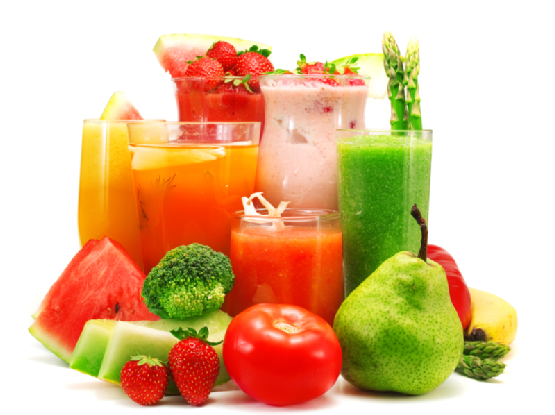
Toronto, Jan 13 (IANS) Contrary to the claims made on their packages, some novel beverages such as vitamin waters and energy drinks marketed in Canada provide little nutritional benefits to the consumers, says a study.
Blocking hormone can fix stress-induced infertility

New York, Jan 13 (IANS) Chronic stress activates a hormone that reduces fertility long after the stress has ended, but blocking this hormone returns female reproductive behaviour to normal, a research on rats has suggested.
Let schoolkids play first, eat later

New York, Jan 13 (IANS) Holding recess before lunch increases fruit and vegetable consumption and decreases waste among schoolchildren, finds a study.
Thursday, January 8, 2015
Top 10 General Cooking Tips for indians

Cooking Tips: -
- To peel the skin of almonds, tomatoes or peaches, simply soak in boiling water for 5-10 minutes. The skin can be easily removed.
- To remove the corn from its cub, hold it straight with one end on the bottom of a big vessel. Then strip the corn with a knife. This will prevent messing up of the entire place.
- When cutting raw banana, potatoes or eggplant, soak it in water to avoid discolouration. Similarly, to prevent apples, bananas or peaches from browning, add lemon juice.
- Use the excess dal water from boiling dal to make rasam.
- While adding curd to gravies or biriyani, break it nicely before adding.
- While boiling milk, a little water can be added to the vessel before adding the milk to avoid the milk from sticking to the bottom.
- Store nuts in the refrigerator to increase their shelf life.
- To separate each string of noodles or any thin pasta, run it under cold water immediately after boiling and draining the water.
- Curd in winter - Set in a ceramic container and place it on the voltage stabilizer of your refrigerator.
- To cut meat easily, freeze it for some time before cutting.
src: simpleindianrecipes.com
What is psoriasis & its symptoms and signs?

What is psoriasis?
Psoriasis is a noncontagious skin condition that produces plaques of thickened, scaling skin. The dry flakes of skin scales are thought to result from the excessively rapid proliferation of skin cells that is triggered by an immune attack by abnormal lymphocytes. Psoriasis commonly affects the skin of the elbows, knees, and scalp.
Top 15 diabetic diet tips for Indians

Dos and don'ts during pregnancy

Speedy health tips for working women

New Delhi: It is rightly said that
behind the success of every man, there is a woman. Gone are the days
when a woman was just confined to the home and kitchen. So, if you are
working, dear lady, you need to take care of your health too in order to
take care of your family. Juggling long working hours and family life,
one rarely finds time for themselves. But, complaining is not the
solution. It is crucial to maintain a balance between your personal and
professional life.
Anger could be an indicator of good health!

New York, Jan 8 (IANS) Contrary to popular belief prevalent in Western societies, researchers have found that anger is actually linked with better, not worse health, in certain cultures.
People who watch TV shun healthy diets

New York, Jan 8 (IANS) People who watch excessive amounts of TV tend to eat more unhealthy foods and might not understand the foundations of a healthy diet, a study says.
Daily avocado cuts heart disease risk

New York, Jan 8 (IANS) Adding an avocado to your daily diet helps lower bad cholesterol and reduce the risk of heart disease, a study says.
Subscribe to:
Posts
(
Atom
)
